-
From the House of the Dead
2. 12. 2018, 7 pm, Brno Exhibition Centre (Pavilion P)


Welsh National Opera
conductor Tomáš Hanus
director David Pountney
How do I get to Brno Exhibition Centre (Pavillon P)? Map HERE

-
Synopsis
Act 1
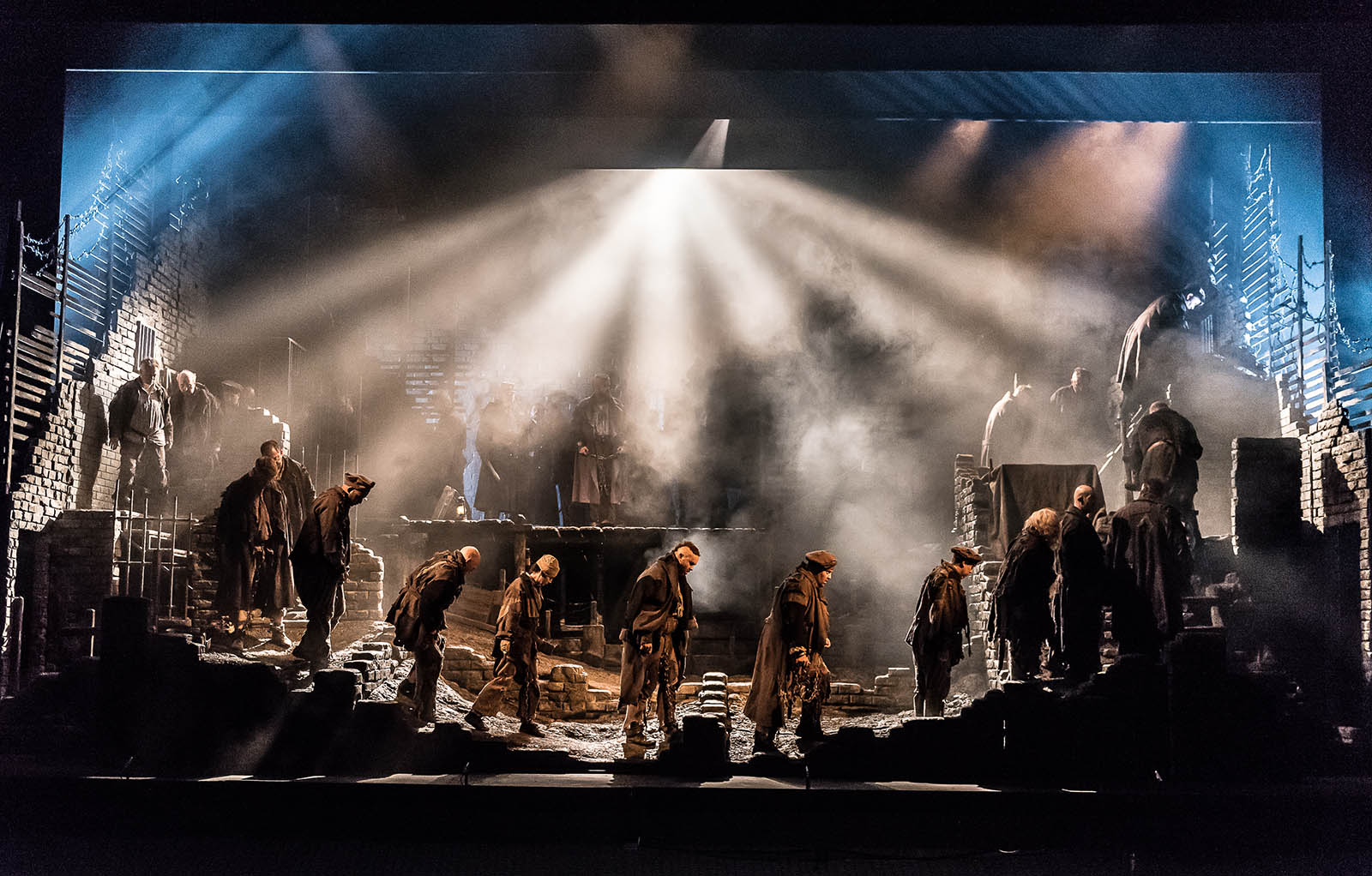
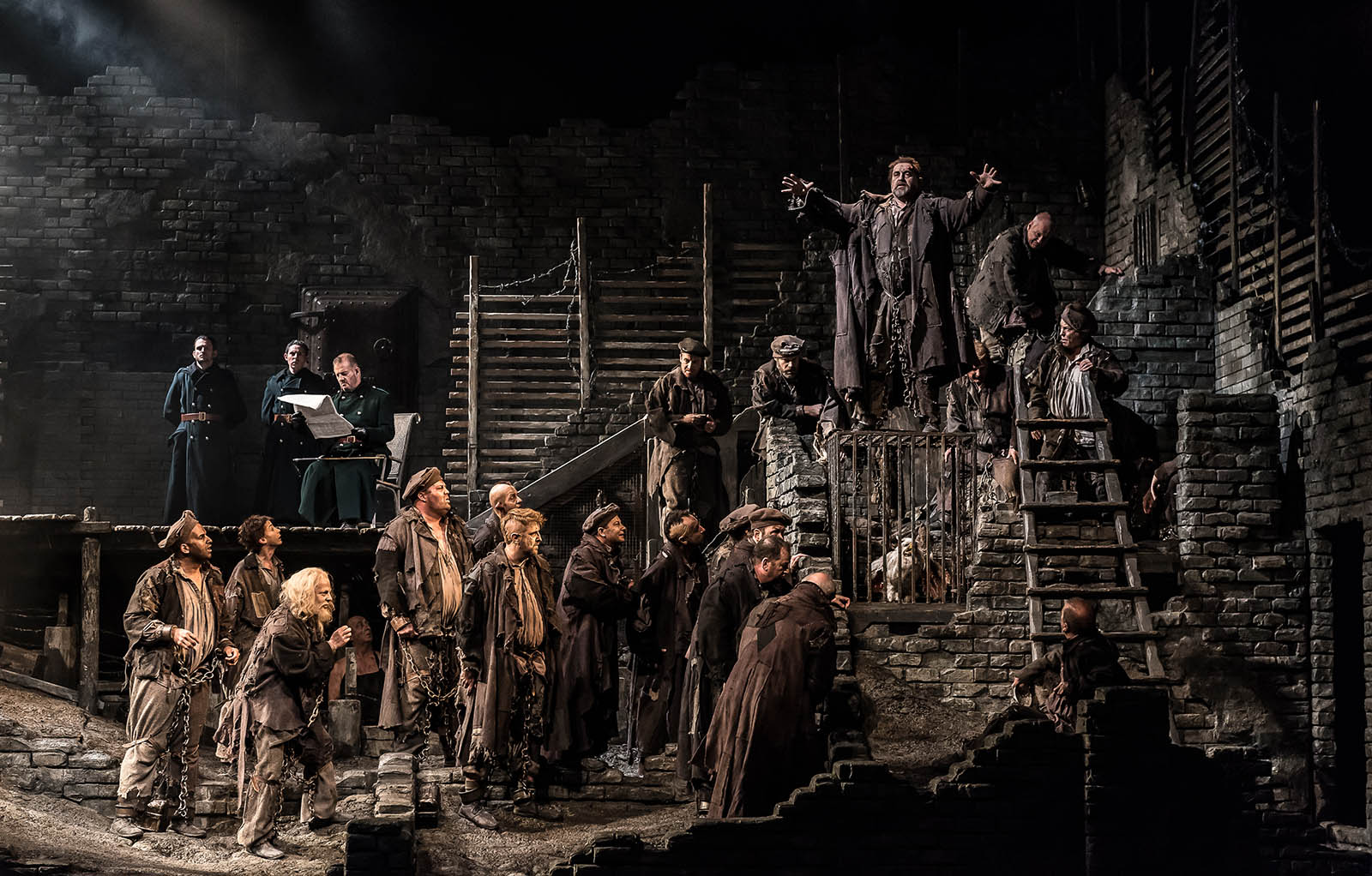
The days in the Czar‘s prison on the river Irtysh are all one like the next: miserable and endlessly long. The prisoners await a newcomer to their ranks, supposedly a „nobelman“. The guards lead Alexander Petrovich Goryanchikov, who simply for the fact that he proclaims him self to be a political prisoner, is immediately tortured. The prisoners who hear his screams gather round the cage of an injured eagle. They would like to set free the eagle at the very least and telease it from its cage; however, the eagle is unable to fly. The return of the guards compels the prisoners to concentrate on their co pulsory work., which they make more pleasant by singing and telling stories. While stitching footwear, Luka Kuzmitch, who stoad up to top military ranks and in fact killed his major because he was tyrannizing him., begins recounting his fate in life. Meamwhile, a guard leads the tortured Goryanchikov who is so weak that he can barely stand on his feet.
Act 2
A year goes by. Goryanchikov if befriended by a young Tatar youth named Alyeya who is reminiscing about his home. There is a reasonably good atmosphere at the prison as it is a holiday and the inmates are permitted to rest instead of working, are given better quality food and drink, and are preparing for individual performances. While preparing, one of them, Skuratov, tells his story: he shot a German who had lured away his beloved. meanwhile a provisional stage had been constructed and the play about Kedril and Juan which the inmates themselves would perform could begin.It greatly entertains everyone and allows them to forget the misery which surrounds them for at least a while. Unfortunately not for very long: one of the prisoners, considerably drunk, seriously injures Alyeya.
Act 3
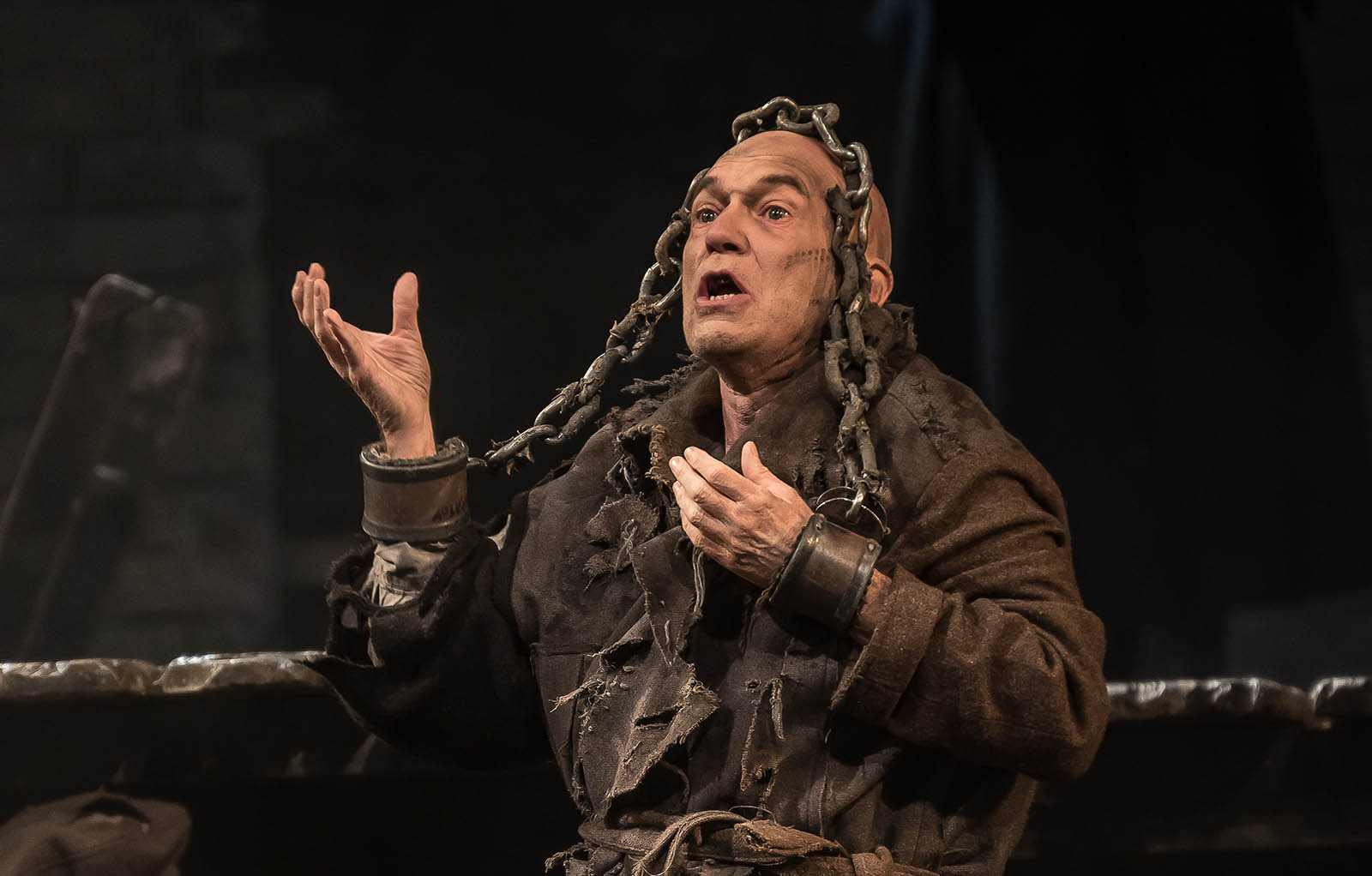
Alyeya is taken to the infirmary. one of the other patients, Shapkin, recounts that he was sentenced simply for vagrancy. As it gets dark, the elderly prisoner is remembering his childern in prayer. At the infirmary lies the dying Luka Kuzmitch: although groaning and breathing with difficulty, he is however conscious and listening to the story that Shiskov is recounting. He knew Akulina, a wealthy woman whose honour was publicly defamed by the solf-assured Filka Morozov. That was why she was given to the impoverished Shiskov as his wife. On their wedding night he discovered that Akulina was innocent. When it came to be know that in spite of all of Filka‘s accusations, she was still passionately in love with him, Shiskov killed her out of jealousy. At those last words, Luka takes his last breath. Shiskov leans over towards him and suddenly recognizes him to be Filka Morozov. The guards era summoned and drag away the dead body. They are now searching for Goryanchikov, who immediately afterwards learms from the site commander that he is to be released. He bids the inmates farewell, especially Alyeya, and departs a free man. At the same time, the eagle is also set free; its wing now fully healed. The prisoners remain between the high walls where the days are all one like the next: miserable and endlessly long.
-
Opera cast lists
conductor: Tomáš Hanus
director: David Pountney
assistant director: Caroline Clegg
set design : Maria Bjornson
costumes: Maria Bjornson
lighting design: Chris Ellis
cast
Alexandr Petrovič Gorjančikov: BenMCateer
Filka Morozov: Mark LeBrocq
Skuratov: Alan Oke
Šiškov: Simon Bailey
Aljeja: Paula Greenwood
Tall prisoner: Paul Charles Clarke
Short prisoner: Richard Immergluck
Čekunov:: Alastair Moore
Prison Governor: Robert Hayward
Elderly prisoner: Peter Wilman
Šapkin: Adrian Thompson
Kedril: SimonButtle
Prostitute: Sarah Pope
Prisoner playing Don Juan: Laurence Cole
Young prisoner: Adam Music
Čerevin: Gareth Dafydd Morris
Drunk prisoner: Michael Clifton-Thompson
Cook: Jasey Hall
Blacksmith: Martin Lloyd
Priest: Alastar Moore
Guard: Joe Roche
4 actors: MatthewBatte, NickHywell, JamesRockey, Dafydd Weeks
Voice from backstage: Gareth Dafydd Morris
Great Britain is the place where, several decades ago, the wave of world-wide interest in the work of Leoš Janáček began, and director David Pountney undoubtedly ranks among those that have won acclaim for their interpretations of his works. He produced Her Stepdaughter for this festival in 2004 with a Brno ensemble, and this time he is bringing us his now classic production of Janáček´s last opera From the House of the Dead, performed by the Welsh National Opera, where he works as the art manager. Behind the conductor´s stand of the excellent Welsh National Opera orchestra will be its music manager, Tomáš Hanus. The performance will be an extraordinary addition to the festival mainly thanks to the musical aspect, as a new critical edition by Prof. John Tyrrell will be presented. It reconstructs the work to be as close as possible to the form which Janáček probably intended, though he never had the opportunity to finish it.
“In every creature there is a spark of God”, Leoš Janáček wrote in the header to the score of his ninth and last opera From the House of the Dead in June 1928. It wasn´t the first occasion that he’d been inspired by Russian literature when composing his work; this time it was Dostoyevsky´s novel The House of the Dead, which describes the hardness of life in a Siberian prison. Janáček´s intention to set such a topic to music was surprising, just like his earlier decision to stage Čapek´s The Makropulos Affair. The extensive novel, with its detailed explorations of moods, descriptions of the environment, psychological analyses, philosophical thoughts, monological narratives and a minimum of dialogue, without a central hero and without female characters, didn´t seem to be a suitable basis for an opera. The size of the novel forced Janáček to make numerous adaptations and reduce the number of characters. Unfortunately, Janáček died on 12th August 1928 without completing the opera, and the produced libretto was never found, only a brief outline. When the Brno theatre decided to perform the opera in the autumn of 1929, Janáček´s pupils, conductors Břetislav Bakala and Osvald Chlubna, made the necessary adaptations. These involved completing the instrumentation, making small changes to the singing parts and altering the end of the work to create a less pessimistic version.
Patricie Částková